
Two Smart Ways to Take the Financial Sting Out of Car Ownership

For most drivers, the day they make their final car payment feels like crossing a finish line. Getting there, though, can be a long road — especially when a high-interest loan and unpredictable repair bills keep draining your bank account month after month. The good news? There are two practical moves that can change the math in your favor and take the sting out of car ownership.

Refinancing your auto loan can lower what you pay in interest and free up cash. And signing up for an online automotive services platform can stretch every maintenance dollar further. Used together, these strategies put you on a faster track to truly affordable car ownership.

Understanding Auto Loan Refinancing

Refinancing simply means swapping your existing loan for a new one with better terms. For most borrowers, that translates to a lower interest rate, a shorter repayment period, or both. A well-timed refinance can reduce what you pay each month and significantly cut the total amount of interest you hand over across the life of the loan.

Beyond the monthly savings, refinancing is one of the more underrated tools for paying off a car faster. When you structure the new loan strategically, you can redirect money that was going toward interest directly at your principal balance — and shorten your timeline to debt-free ownership in the process.

Three Ways Refinancing Accelerates Your Payoff

Lock in a lower rate. If your credit score has climbed since you first financed, or if market rates have fallen, there’s a solid chance you qualify for a better deal today. A lower rate means a bigger slice of every payment chips away at what you actually owe.
Choose a shorter term. Compressing your loan into fewer months costs a bit more each month, but the trade-off is worth it — you clear the debt sooner and avoid paying interest you’d otherwise rack up over extra years.
Put your savings to work. Some borrowers refinance to reduce their monthly payment, then deliberately apply the difference as an extra principal payment each month. Even modest overpayments can trim several months off a loan.

What an Online Automotive Services Platform Does for You

You might not have heard much about this category, but online automotive service platforms have quietly become one of the better tools for keeping vehicle costs manageable. Think of them as a comparison-shopping engine built specifically for car care — mechanical repairs, routine maintenance, collision work, glass replacement, car washes, and roadside assistance are all in the mix.

The real value, though, isn’t just price. It’s access to vetted, local professionals who are matched to your specific vehicle. If you drive a Honda, for example, you want to land with a shop that services Hondas regularly, sits within a reasonable distance, and has been evaluated by a third party — not just whoever shows up first in a search. That kind of qualified matchmaking is hard to replicate on your own.

Three Ways These Platforms Lower Ownership Costs

Transparent comparison shopping. Enter the service you need and you’ll see several nearby providers presented side by side — upfront pricing, distance, customer ratings, available amenities, and more. Each shop has been vetted before appearing in results, so you’re comparing quality options rather than sorting through unknowns.
Competitive estimates on the same job. Labor rates and margins vary from shop to shop, which means the price for an identical repair using identical parts can differ by a meaningful amount. Seeing those estimates in one place makes it easy to find fair value without making a dozen phone calls.
Booking that works around your schedule. Time is money, and calling around to check availability eats up both. Online platforms show you which providers have open slots and let you book directly — no hold music, no back-and-forth.

Where to Start Taking the Sting out of Car Ownership

If you’re ready to explore refinancing, Gravity Lending specializes in connecting drivers with competitive loan options nationwide. Their team works with you to find terms that fit your budget — whether you’re after a lower payment today or a strategy to pay off your balance sooner.

How Far Can Your EV Go After It Says It’s Empty?

All 15 EVs kept going after the dash showed empty. They averaged another 10 miles (16 km).
The Leapmotor B10 went farthest at 19.9 miles (32 km), followed by the Tesla Model Y at 19.3 miles (31 km). The Xpeng P7+ stopped after just 0.6 miles (1 km).
A car can show 0% charge while it still predicts some range; 0% and zero miles don’t always coincide.

What do you do when your EV’s range prediction shows zero and the nearest charger is still a few miles away? Will you make it? In a Tesla Model Y Long Range, you’d pull in with miles to spare, while in an Xpeng P7+, you’d have been on the phone with roadside assistance, even if the Xpeng goes farther on a full charge.

That’s one of the more revealing findings from AUTOBEST’s 2026 ECOBEST Challenge. All 15 EVs that took part in the group test kept moving after their dashboards showed empty, averaging 10 miles (16 km) before they stopped. The Leapmotor B10 led with 19.9 miles (32 km), about a mile ahead of the Model Y. At the other end, the Xpeng barely managed 0.6 miles.

How They Ran The Cars Down

Car journalists drove these production-spec EVs in convoy near Milan, Italy, on a set route containing a mix of city streets, country roads and highways. A lead car set the pace, and drivers traded cars every 19 miles (30 km) to level out potential differences in driving style.

Only the driver was aboard each car; all vehicles were set to their standard (not Eco) mode, with climate control on and tires set to the recommended pressures. Temperatures ranged from 68–77°F (20–25°C).

The final stretch took place at Quattroruote’s Vairano proving ground. When a car’s dashboard showed either zero remaining range or 0% battery charge, its driver kept going until the car could no longer move under its own power. They measured the distance between those two points to see how far each EV could still go.

They used a Zeekr 7GT as a support vehicle to quickly reach drivers whose EVs had stopped. Using its vehicle-to-load (V2L) function, it drew electricity from its own battery pack to get the other vehicles moving again, eliminating the need for a dedicated EV road assistance van.

What ‘Empty’ Actually Means

When your EV says it’s empty, it means you’ve used up the range the car promised you. You may still have enough energy to drive a little farther, since all EVs have a buffer. As the state of charge goes down, the voltage in the battery cells also drops. Before it goes too low, which can damage the cells, the car cuts power to the motor.

So, even when an EV shows 0% and can’t move, some charge remains in the pack—the car won’t let it go completely flat.

Zero percent is the car’s estimate of its remaining usable charge. The range estimate approximates how far that energy will take you. Interestingly, those numbers don’t necessarily have to coincide; they can hit zero at different times. For instance, in one range test, the Tesla Model 3 still showed 2 miles (3.2 km) of range when the state of charge dropped to 0%. It went another 31 miles (50 km) after that point.

What to Look For When Buying New Tires – Many Tips

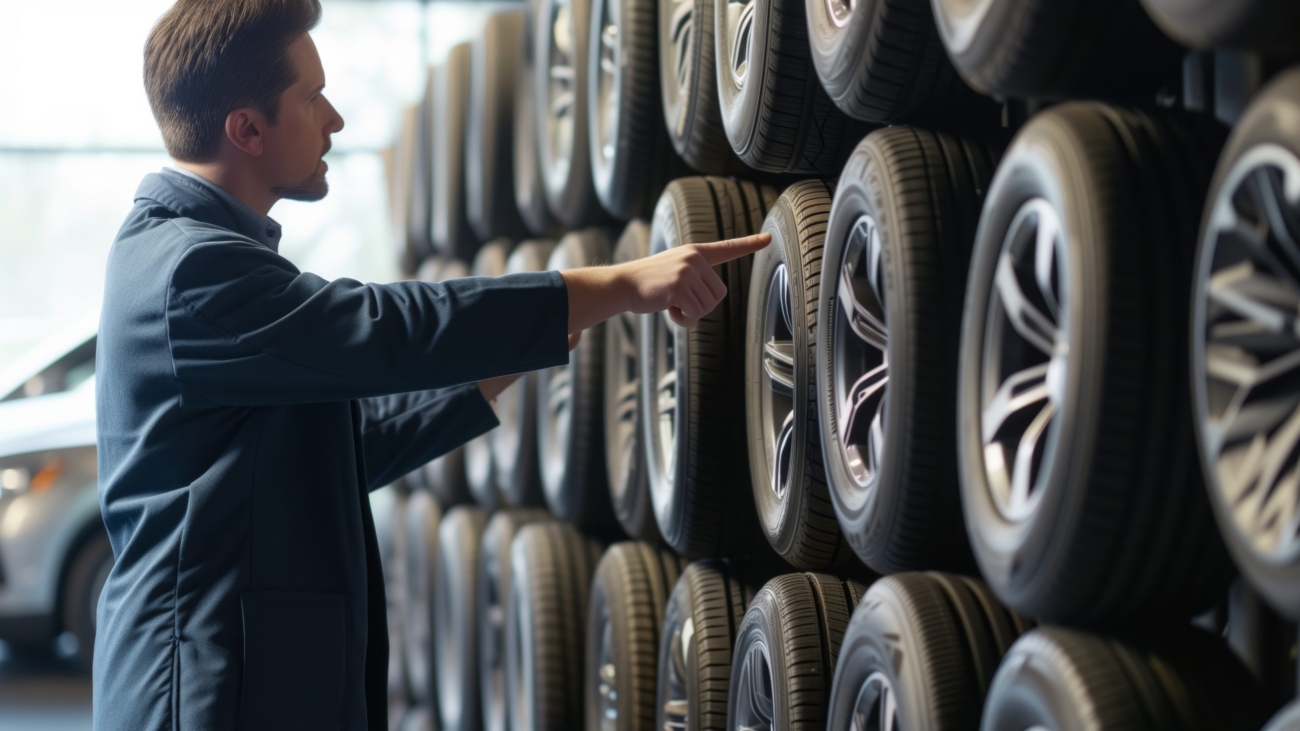
Buying new tires should be a simple task: roll into your shop of choice, let the experts do their work, and drive away with confidence. Unfortunately, it doesn’t always go that smoothly. There are some cases of tire shops installing the wrong type of tire for a specific vehicle. The lesson? Don’t leave all the decision-making to the professionals. Educate yourself instead.

Here are the essential factors you should consider when purchasing new tires.

1. The Tread Wear Indicator

Knowing when to replace your tires is the first step. Tires are replaced for many reasons, including preparing for winter or retiring a tire whose structural integrity has been compromised by age. However, the most common reason is simple wear.

In most states, tires are legally considered unsafe when they are worn down to 2/32” of remaining tread. One of the easiest ways to check this is to inspect the tread wear indicator bars molded into the tire’s grooves. When these bars become flush with the surrounding tread, the tire has reached its limit and must be replaced immediately.

2. Understanding Tire Size

Installing the wrong tire size can be both damaging to your vehicle and dangerous. Tires that are too tall can rub against the struts or wheel wells, while tires that are too small can create stability and handling issues.

Always check the tire size specified in your owner’s manual or on the placard inside the driver-side door jam. While there is occasionally a small amount of “wiggle room” for going slightly wider or taller, you should never deviate from manufacturer recommendations without expert consultation. Additionally, never mix different tire sizes or brands on the same axle.

3. Consider Your Driving Habits

Not all tires are created equal. High-performance cars often require tires with specific speed ratings. These are manufactured with more “flex” in the sidewall to provide better grip and heat dissipation.

Check your manual for the recommended speed rating, but also consider your environment. If you live in an area with heavy rain or snow, look for “All-Season” or dedicated “Winter” tires. If you primarily drive on highways in a dry climate, a “Grand Touring” tire might provide a quieter, more comfortable ride.

4. Tire Warranty and Road Hazard Protection

The warranty can directly impact your long-term costs. Tires typically come with a tread-life warranty ranging from 30,000 to 100,000 miles. Keep in mind that high-performance tires wear out faster and may offer shorter warranties (or none at all).

Beyond the manufacturer’s warranty, many shops offer Road Hazard Protection. This covers you in the event of a blowout or an unrepairable flat caused by potholes or debris. Before you buy, ensure you understand what the shop’s protection plan covers.

Additional Tips for the Savvy Buyer

Check the “Birth Date”: Tires have a four-digit DOT code on the sidewall representing the week and year they were made (e.g., “1224” means the 12th week of 2024). Rubber degrades over time, even if it isn’t being used. Avoid buying “new” tires that have been sitting on a shelf for more than two or three years.
The Spare Tire: When replacing a full set, check the condition and age of your spare. If it’s over six years old, it may be time to replace it as well, even if it has never touched the ground.
Alignment and Balancing: Always insist on a wheel alignment when buying a new set of tires. If your alignment is off, your brand-new tires will wear unevenly and wear out significantly faster.
Fuel Efficiency (Rolling Resistance): Some tires are designed to be “Low Rolling Resistance.” These can actually improve your gas mileage by reducing the energy lost as heat when the tire rolls.


Winter’s Over. Is Your Car Ready for What Comes Next?

Vehicle Maintenance Guide

Cold starts, potholes, road salt — your vehicle took a beating this season. Here’s how to bring it back to fighting shape and keep it there all summer long.

Safety-Critical Checks

⚠ Critical Safety

Brakes

Your brakes are the single most important safety system on your vehicle — don’t skip this one. Winter driving puts extra strain on rotors, pads, and calipers.

Squeaking or grinding when you stop
Vibration felt through the pedal
Noticeably longer stopping distances
Brake pedal that feels soft or spongy

⚠ Critical Safety

Battery

Cold weather is brutal on batteries — it can reduce a battery’s capacity by up to 35%. If your car has been slow to start, or your battery is 3+ years old, get it tested now before warmer temps mask a weak cell. Many auto parts stores offer free battery testing – take only a few minutes to have your battery checked out.

Slow or sluggish engine cranking
Battery warning light
Corrosion visible on terminals
Battery older than 3–5 years
● High Priority

Tires

Potholes and temperature swings take a real toll. Tires in poor condition affect everything — fuel economy, handling, braking, and blowout risk.

Check tread depth (penny test: replace if Lincoln’s head is visible)
Inflate to door-sticker spec — pressure drops with cold then fluctuates in heat
Look for sidewall cracking or bubbles
Schedule a rotation to even out wear

● High Priority

Wipers & Visibility

Spring means rain. Winter wiper blades work hard scraping ice and snow, and they crack and streak faster than you’d think. Visibility isn’t a “nice to have.”

Replace blades if they streak, skip, or squeak
Top off windshield washer fluid
Clean the wiper edge with a microfiber cloth if blades look intact
Check all lights — headlights, brake lights, turn signals

Under the Hood

● High Priority

Oil & Engine Fluids

If it’s been a while, start here. Fresh oil protects your engine against wear and runs cleaner. Check all fluids — top them off and watch for leaks.

Engine oil (check color and level)
Coolant / antifreeze
Brake fluid
Power steering fluid
Transmission fluid

✓ Routine

Air Filter

A clogged air filter makes your engine work harder, hurts fuel economy, and can reduce performance. Easy to check, inexpensive to replace.

Replace engine air filter if visibly dirty or per manufacturer interval
Don’t forget the cabin air filter — it affects your A/C airflow and air quality inside

✓ Routine

Belts & Hoses

Extreme cold can cause belts to crack and hoses to become brittle. A failed belt can leave you stranded; a burst hose can overheat your engine fast.

Inspect belts for fraying or cracking along the edges
Squeeze hoses when cold — none should feel hard or brittle
Look for leaks around fittings

Exterior & Ride Quality

● High Priority

Alignment & Suspension

Potholes and frost heaves are alignment’s worst enemies. Driving on a misaligned car eats tires fast and wears out suspension parts prematurely.

Vehicle pulling to one side while driving straight
Steering wheel off-center on a straight road
Uneven or rapid tire wear
Excessive bouncing or swaying
✓ Routine

Wash, Wax & Undercarriage

Road salt is corrosive. Left to sit, it eats through paint, metal, and undercarriage components. A thorough spring wash — especially underneath — protects your vehicle’s long-term value.

Wash undercarriage, wheel wells, and rocker panels
Use salt-removing car wash soap
Apply a coat of wax as a UV and environmental barrier


Your Spring Checklist at a Glance

Run through these before the summer heat arrives and you’ll be in great shape — and far less likely to see a roadside breakdown.

Oil change & fluid check

Brake inspection

Battery test

Tire pressure & tread

Tire rotation

Wiper blade replacement

Belts & hoses inspection

Air filter check
Wheel alignment check

Suspension inspection

All lights working

Thorough wash & wax


Why Is My Range Rover Losing Coolant? Causes & Fixes

If your Range Rover is losing coolant, it’s important to address the issue quickly. Coolant plays a critical role in regulating your engine’s temperature, and a steady loss can quickly escalate into overheating, warped components, or expensive engine repairs — a risk that’s amplified in the UAE’s extreme summer heat, where engines already work harder to stay cool.

If you notice your Range Rover losing coolant repeatedly, don’t simply keep topping up the coolant reservoir. Recurring coolant loss usually indicates an underlying problem, such as a leaking hose, damaged radiator, failing water pump, cracked expansion tank, or, in serious cases, a head gasket problem.

Common Reasons Your Range Rover Is Losing Coolant

There are several reasons why a Range Rover may be losing coolant. Some problems are relatively simple to repair, while others can lead to serious engine damage if they aren’t diagnosed quickly.

🌡️ Coolant Hose Leaks

Range Rover cooling systems rely on several rubber hoses to circulate coolant between the engine, radiator, and expansion tank. Summer heat accelerates rubber degradation, making hoses prone to cracking, softening, or splitting at the joints — often faster than in more temperate climates.

A damaged hose can cause a slow coolant leak that may initially be difficult to notice. As the leak becomes worse, the coolant level can continue to drop and eventually result in engine overheating.

What to do: Have hoses visually inspected every service interval. Replace any hose showing swelling, brittleness, or visible cracking before it fails on the road.

🔧 Faulty Water Pump

The water pump keeps coolant circulating through the engine block. When its seal wears out or the bearing fails, coolant can leak internally or externally, and cooling performance drops sharply.

A failing water pump is another possible reason your Range Rover is losing coolant, particularly if you notice other cooling-system symptoms at the same time.

Warning signs: Engine temperature gauge creeping up, coolant puddles under the car, a whining or grinding noise from the front of the engine.

🚘 Radiator Leaks

Radiators are exposed to road debris, corrosion, and constant thermal cycling. Over time, seams can weaken and fins can corrode, leading to gradual — sometimes hard-to-spot — coolant loss.

If your Range Rover coolant level keeps dropping but there is no obvious hose leak, the radiator should be inspected for cracks, damaged seams, or other signs of coolant leakage.

What to do: Check for coolant stains or a sweet smell near the front of the vehicle, and book a radiator inspection if the coolant level drops without any visible leak elsewhere.

⚠️ Expansion Tank Cracks

The plastic expansion tank absorbs pressure changes as coolant heats and cools. Repeated heat cycling in the UAE climate can make the plastic brittle, leading to hairline cracks that seep coolant slowly.

A cracked expansion tank can therefore be a common reason for gradual coolant loss. You may notice that the coolant warning appears repeatedly even after topping up the system.

Warning signs: Recurring low coolant warnings despite topping up, coolant residue around the tank’s seams or cap.

🛠️ Head Gasket Problems

A failing head gasket is one of the more serious causes of coolant loss, since it can allow coolant into the combustion chamber rather than leaking externally. This is often accompanied by other symptoms and should be diagnosed quickly to avoid engine damage.

If your Range Rover is losing coolant with no visible external leak, a technician may need to investigate whether an internal coolant leak or head gasket problem is responsible.

Warning signs: White exhaust smoke, engine overheating, continuous coolant loss with no visible external leak.

Why You Shouldn’t Ignore Coolant Loss

Small coolant leaks rarely stay small. Left unaddressed, they can lead to:
● Engine overheating
● Cooling system failure
● Costly repairs to the engine block or head gasket
● Unexpected breakdowns, often at the worst possible time — mid-commute in traffic

Regular car maintenance checks can catch these issues while they’re still minor, low-cost fixes.

If your Range Rover is losing coolant, continuing to drive without identifying the cause can allow a relatively minor leak to develop into a major cooling-system or engine problem.

How to Prevent Coolant Problems

Preventive maintenance can help identify cooling-system problems before they become serious. If your Range Rover regularly operates in hot climate, keeping an eye on the coolant level is particularly important.

● Check coolant levels at least once a month, more often in peak summer
● Inspect hoses, the radiator, and the expansion tank during every service visit
● Service the cooling system on schedule, not just when a warning light appears
● Address dashboard warning lights immediately rather than waiting for the next scheduled service
● Consider an Annual Maintenance Contract (AMC) so cooling system checks are built into your regular servicing schedule

5 Engine Noises You Should Never Ignore

Engine noises US drivers experience should never be ignored, as they are often early warning signs of serious mechanical issues. Whether it’s knocking, squealing, grinding, or rattling, these sounds can indicate problems that need immediate attention.

For US drivers, ignoring these warning signs can quickly lead to costly repairs or unexpected breakdowns. The key is to recognize these noises early and take action before the damage worsens.

In this guide, we break down 5 engine noises US drivers should never ignore and explain exactly what to do when you hear them.

🔧 1. Knocking or Pinging Sounds

What It Sounds Like

A consistent tapping or knocking noise, especially when accelerating.

What It Means

This type of engine noise is commonly caused by:

Inefficient fuel combustion
Worn spark plugs
Low engine oil levels

If ignored, it can severely damage pistons and internal engine components.

👉 What to Do:
Check your engine oil immediately and schedule a professional inspection.

🔧 2. Squealing Noise Under the Hood

What It Sounds Like

A high-pitched squealing noise when starting the engine or turning the steering wheel.

What It Means

This usually indicates:

A loose serpentine belt
A worn-out timing belt

If the belt fails, your vehicle may stop running instantly.

👉 What to Do:
Replace worn belts promptly to avoid sudden breakdowns.

🔧 3. Grinding Noise When Starting

What It Sounds Like

A harsh grinding or metal-on-metal sound during ignition.

What It Means

This could be a sign of:

A failing starter motor
Damaged flywheel teeth

Delaying repairs can lead to complete starter failure.

👉 What to Do:
Have your starter system inspected by a qualified mechanic as soon as possible.

🔧 4. Hissing or Sizzling Sounds

What It Sounds Like

A hissing or sizzling noise after switching off the engine.

What It Means

Often linked to:

Coolant leaks
Oil leaks dripping onto hot engine parts

This can cause overheating and serious engine damage if left untreated.

👉 What to Do:
Inspect your vehicle for leaks and book urgent servicing.

🔧 5. Loud Exhaust or Rattling Noise

What It Sounds Like

A deep rumbling, rattling, or vibrating sound coming from the exhaust.

What It Means

This may be due to:

A damaged muffler
An exhaust system leak

Such issues can reduce fuel efficiency and allow harmful fumes into your vehicle.

👉 What to Do:
Visit a trusted workshop for a thorough exhaust inspection.

⚠️ When Should You Worry About Engine Noises?

You should act immediately if:

The noise becomes louder or persistent
Your car’s performance drops
You feel unusual vibrations while driving

Early diagnosis can prevent expensive repairs and keep your car running safely.

🚗 Carcility Tip

If you notice unusual engine noises US drivers often experience, don’t ignore them. What starts as a minor issue can quickly escalate into a major repair.

This New EV Motor Spins To 30,000 RPM. It’s Designed For Normal Cars

ZF’s new motor spins at 30,000 rpm to deliver the same power in a smaller package.
The company claims nearly 25% less drive-unit weight and bulk, with half the magnet material.
Production is targeted for 2030, but ZF hasn’t named any cars that will use it.

An electric motor spinning at 30,000 rpm sounds like something you might find in a high-power EV supercar. ZF has something less extravagant in mind: making the hardware that powers everyday EVs smaller, lighter, and less hungry for expensive materials.

ZF’s new High Revolution Drive combines the motor, power electronics, and transmission all in the same housing. Unlike Mercedes-Benz, though, it doesn’t also put the brakes inside the same housing.

Compared with one of ZF’s comparable Select drive units, which spins up to 18,000 rpm, the company claims nearly 25% less weight and volume, half the magnet mass, and a similar efficiency of almost 93%.

ZF High Revolution Drive

This helps because less mass improves EV range, and fewer magnets reduce costs and supply-chain dependence.

According to ZF, spinning the motor faster lets it deliver the same power from a smaller, lighter package. Gears then reduce that speed and increase the turning force sent to the wheels, using a reduction ratio of about 18:1. The version ZF showed produces up to 268 horsepower, with the gearing delivering peak torque of 2,581 pound-feet (3,500 Nm) to the wheels.

The torque measurement comes after the gearing has multiplied the motor’s output. The “two-stage transmission” doesn’t actually mean a two-speed gearbox. It describes successive gear reductions, not two separate driving ratios.

The company says the production High Revolution Drive should deliver 200 to 268 hp and work with both 400- and 800-volt platforms. Reusing its modular Select architecture should simplify installation, shorten development and control costs, and retain manufacturing flexibility. Talks with automakers are underway, with production targeted by 2030.

ZF isn’t alone in trying to squeeze more useful output from a smaller package. One prototype of Yasa’s ultra-compact axial-flux motor produced over 1,000 hp and weighed just 28 pounds. That’s its short-term peak figure, with continuous output estimated at 469–536 bhp.

Yasa’s figure describes only the motor, while ZF’s weight reduction refers to the whole integrated drive unit. Gearing and power electronics still need somewhere to live, and they also add weight.

ZF has also introduced repair kits intended to let workshops fix individual drive unit components, such as gearbox bearings, instead of replacing entire assemblies. That addresses a different problem from shrinking and making hardware lighter, but one buyers may care about considerably more once the warranty expires.

However, ZF hasn’t said whether these two developments are connected, or whether the kits it revealed should be taken as a repairability promise for this new drive. There’s also no mention of which production EV would get this new drive unit. We also don’t know whether those engineering gains will remain unchanged from today’s announcement to something you can actually buy.

Still, this kind of EV development deserves attention even without a four-figure horsepower claim. A family car doesn’t need to break acceleration records, but making its drive unit lighter and less expensive (and possibly easier to repair, too) is exactly what it needs. Whether any savings reach buyers is another question, but giving cars the same power with smaller and less hardware is a good place to start.

Winter Storm Coming – Prepare Now for Major Snow and Ice

Weather alerts are flashing coast-to-coast. With heavy snowfall, plummeting temperatures, and “black ice” on the horizon, the margin for error on the road has disappeared. If you haven’t winterized your vehicle yet, today is your deadline.

1. The “Big Three” Winter Checks

Before the first flake falls, verify these three critical components:

The Battery: Cold weather is the #1 battery killer. If your battery is over three years old, it may lack the “Cold Cranking Amps” needed to start in freezing temps.

Tires & Pressure: Cold air causes tire pressure to drop. Ensure you have adequate tread depth and correct PSI to maintain grip on slick surfaces.

Visibility: Replace streaking wiper blades and top off your winter-grade fluid. If you can’t see, you can’t drive.

2. Pack Your “Dig-Out” & Survival Kits

Don’t leave your safety to chance. If you get stuck, you need more than just a cell phone.

For the Car: A small shovel, ice scraper, jumper cables, and traction aids (like sand or cat litter).

For You: Heavy blankets, extra gloves, a flashlight with fresh batteries, water, and non-perishable snacks.

3. Master the Ice

When the roads get treacherous, remember the golden rule: Smooth is safe. Avoid sudden braking or sharp turns. If you start to slide, take your foot off the gas and steer in the direction you want to go. Increase your following distance to at least 8–10 seconds—stopping on ice takes significantly longer than on dry pavement.

Ford Tested 36,000 Mustang Mach-E Batteries. Here’s How They Held Up After 100,000 Miles

Ford collected battery health data from around 36,000 Mustang Mach-E electric SUVs and shared the results.
Battery degradation is one of the top concerns from car buyers, but Ford’s data shows that there isn’t much to worry about.
Even Mach-Es with 100,000 or 200,000 miles on the odometer retained most of their original range.

It’s one of the top questions I get about EVs: “How long will the battery last?” Understandably, people want to know that their car will go the distance before dropping tens of thousands of dollars on a new car with new-to-them technology.

A growing body of research shows that modern electric cars hold up just fine over years of normal use. And a huge study of Ford Mustang Mach-E SUVs further proves the point.

The Detroit automaker collected battery-health data from 36,000 Mach-E SUVs from the 2021 model year that were sold in the U.S. and Canada. The results, released Monday, should help quiet fears that EVs degrade like smartphones, which struggle to hold a charge after a few years of daily use.

On average, the cars had traveled 55,000 miles over 5.2 years and retained 92% of their usable battery capacity. That means a top-trim 2021 Mustang Mach-E with 305 miles of EPA range would in theory be rated for around 280 miles today. All the cars in the study have nickel-cobalt-manganese (NCM) battery packs, since Ford didn’t introduce a lithium-iron-phosphate (LFP) battery for the Mach-E starting until the 2023 model year.

The 2021 Mustang Mach-Es Ford studied retained 92% of their battery health on average after five years on the road.

Ford physically tests cells in the lab and tries to predict battery degradation using computer models before a model launches, Kevin Vander Laan, the automaker’s technical leader of high-voltage battery cells and systems, told me in an interview. But the real test comes after a car spends years on the road.

“Our report card slowly trickles in over time,” he said. “So here we are with a five-year report card, and it looks great.”

Interestingly enough, putting on twice as many miles as average in the same time period barely impacted overall battery health. Ford says the over 2,000 SUVs with more than 100,000 miles on the odometer retained more than 91% of their battery capacity.

Those few drivers who put some 40,000 miles on their Mach-Es each year still had strong battery health after five years. Ford says the 30-plus cars in its dataset that had covered more than 200,000 miles showed 88% battery health.

Of course, these are just averages. So your results may vary depending on lots of factors. EVs that spend their lives in the hot American Southwest tend to age more rapidly than those driven in more temperate climates. Likewise, EV batteries that are frequently fast-charged to 100% and drained to near-empty typically wear out faster than those that are kept in the happy zone of 20% to 80%.

Still, Ford says the distribution of results is encouraging for its battery engineers: It says 95% of the 36,000 cars fell between 87% and 97%.

The results are in line with what other research has uncovered about how EVs age. Some early EVs (notably the first-gen Nissan Leaf) had less sophisticated battery thermal management and saw steep degradation as a result. But modern EVs tend to age far more gracefully.

According to Recurrent, a firm that tracks range retention in used EVs that opt in, the average EV retains 97% of its original observed range after three years and 95% after five years.

In September, battery-health startup Aviloo released the results of 500,000 EV battery tests. After 150,000 kilometers (around 93,000 miles), most models studied showed between 90% and 94% health. The Hyundai Ioniq 5, BMW i4, and Mercedes EQA stood out with readings near the top end of that range. The Mustang Mach-E did just about as well as Ford’s own data show: 92.5% battery health. The Tesla Model 3 and Model Y came in at 88.9% and 90.3%, respectively.

The 2027 Ford Mustang Mach-E Trail

Ford makes some familiar recommendations to drivers looking to make sure their EVs last as long as possible. The company says to manage temperature extremes by parking in the shade on scorching days and preconditioning the cabin while the vehicle is plugged in. It also recommends relying on Level 2 charging for daily driving, and using Level 3 DC fast chargers sparingly.

Vander Laan says the learnings from this crop of EVs and how they perform contribute to the development process for Ford’s next-generation electric cars, like the sub-$30,000 Fathom pickup coming next year.

“It’s really continuous learning,” he said. “We have a design that we deeply understand, the data is flowing in, we’re learning learning from that, and feeding that to the engineering teams in the company here.”